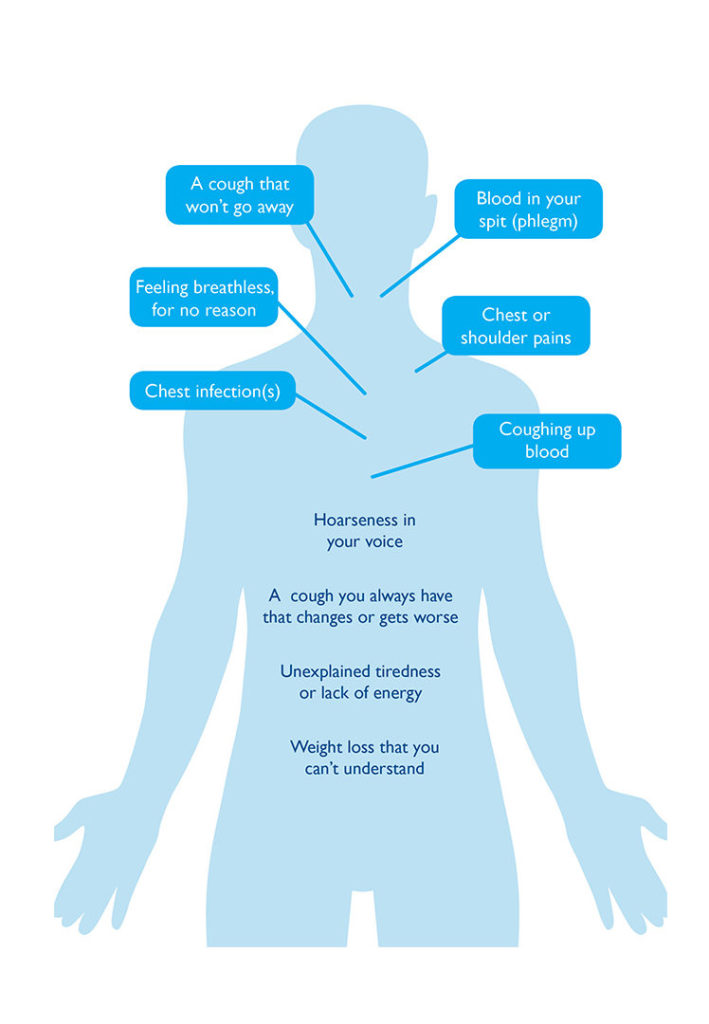
How To Know Lung Cancer Symptoms : How To Know Signs And Symptoms Of Lung Cancer | Lady Care ... : If you notice some of these symptoms in your loved one, we recommend contacting their primary care physician and/or hospice care provider immediately:. 11 surprising signs of lung cancer you need to know people often associate lung cancer with breathing problems like coughing, shortness of breath, or wheezing. This pressure causes some of the signs and symptoms of cancer. Signs and symptoms of lung cancer typically occur when the disease is advanced. Read on—and to ensure your health and the health of others, don't miss this urgent news: A cancer can grow into,or begin to push on nearby organs, blood vessels, and nerves.
Symptoms of lung cancer develop as the condition progresses. One of the most obvious signs of lung cancer in men and women both is chronic pain in the chest, which gets intense while breathing or even laughing. Chronic, hacking, raspy coughing, sometimes with mucus that has blood in it. The most common symptoms of lung cancer, according to the american cancer society, are the following. As the cancer develops, these symptoms may become more severe or intense.
How to Survive Mesothelioma from www.hivehealthmedia.com You might have a build up of fluid between the chest wall and the lung called a pleural effusion. Weight loss is also almost universal, and it occurs even when people are eating a diet with adequate calories. If you have possible signs or symptoms of lung cancer, see your doctor. The actual diagnosis of lung cancer is made by looking at a sample of lung cells in the lab. Read on—and to ensure your health and the health of others, don't miss this urgent news: Cancer cachexia, a syndrome including unintentional weight loss and muscle wasting, is very common in the later stages of cancer. Signs and symptoms of lung cancer typically occur when the disease is advanced. You also won't be able to sweat as well on that side of your face.
Sure signs you have long covid and may not even know it.
You also won't be able to sweat as well on that side of your face. Signs and symptoms of lung cancer typically occur when the disease is advanced. This pressure causes some of the signs and symptoms of cancer. Read on—and to ensure your health and the health of others, don't miss this urgent news: Changes in breathing can occur if lung cancer blocks or narrows an airway, or if fluid from a lung tumor. 11 surprising signs of lung cancer you need to know people often associate lung cancer with breathing problems like coughing, shortness of breath, or wheezing. When signs of the disease start to appear, they can include: Symptoms of lung cancer develop as the condition progresses. See a doctor if your cough lasts more than 2 weeks, if it increases in intensity over time, or if you cough up blood (this is called hemoptysis) or a lot of phlegm. Profound fatigue is very common in the late stages of lung cancer. Signs and symptoms of lung cancer may include: Sure signs you have long covid and may not even know it. Weight loss is also almost universal, and it occurs even when people are eating a diet with adequate calories.
Changes in breathing can occur if lung cancer blocks or narrows an airway, or if fluid from a lung tumor. Symptoms will vary depending on where the cancer is. The most common symptoms of lung cancer are: When signs of the disease start to appear, they can include: The most common symptoms of lung cancer, according to the american cancer society, are the following.
Lung cancer signs and symptoms - Roy Castle Lung Cancer ... from www.roycastle.org The main symptoms of lung cancer include: One of the most obvious signs of lung cancer in men and women both is chronic pain in the chest, which gets intense while breathing or even laughing. Changes in breathing can occur if lung cancer blocks or narrows an airway, or if fluid from a lung tumor. If you experience any of these symptoms, please talk to your doctor to rule out lung cancer: Read on—and to ensure your health and the health of others, don't miss this urgent news: You also won't be able to sweat as well on that side of your face. Symptoms include a small pupil in one of your eyes with a droopy eyelid. Metastatic, or secondary, lung cancer starts in another part of your body but spreads to your lungs.
As the cancer develops, these symptoms may become more severe or intense.
Lung cancer usually has no symptoms in its early stages. Learn the signs and symptoms, how to treat it, and what the outlook is for someone who has it. The most common symptoms of lung cancer, according to the american cancer society, are the following. The symptoms of horner syndrome include drooping or weakness of one upper eyelid, a smaller pupil in the affected eye, and little or. Symptoms will vary depending on where the cancer is. Changes in breathing can occur if lung cancer blocks or narrows an airway, or if fluid from a lung tumor. 11 surprising signs of lung cancer you need to know people often associate lung cancer with breathing problems like coughing, shortness of breath, or wheezing. Lung cancer is treated in several ways, depending on the type of lung cancer and how far it has spread. Chronic, hacking, raspy coughing, sometimes with mucus that has blood in it. Like many other types of cancer, lung cancer may also cause systemic symptoms, like loss of appetite or general fatigue. Metastatic, or secondary, lung cancer starts in another part of your body but spreads to your lungs. A new cough that doesn't go away coughing up blood, even a small amount When signs of the disease start to appear, they can include:
Read on—and to ensure your health and the health of others, don't miss this urgent news: Medical history and physical exam Signs and symptoms of lung cancer may include: Symptoms include a small pupil in one of your eyes with a droopy eyelid. Lung cancer is treated in several ways, depending on the type of lung cancer and how far it has spread.
7 Lung Cancer Symptoms You Should Know; Learn more from i1.wp.com Some lung cancers can be found by screening, but most lung cancers are found because they are causing problems. Lung cancer symptoms the early symptoms of lung cancer may be a slight cough or shortness of breath, depending on which part of the lung is affected. One of the most obvious signs of lung cancer in men and women both is chronic pain in the chest, which gets intense while breathing or even laughing. Lung cancer is treated in several ways, depending on the type of lung cancer and how far it has spread. If you experience any of these symptoms, please talk to your doctor to rule out lung cancer: Symptoms include a small pupil in one of your eyes with a droopy eyelid. Like many other types of cancer, lung cancer may also cause systemic symptoms, like loss of appetite or general fatigue. Weight loss is also almost universal, and it occurs even when people are eating a diet with adequate calories.
Metastatic, or secondary, lung cancer starts in another part of your body but spreads to your lungs.
Symptoms of lung cancer develop as the condition progresses. Changes in breathing can occur if lung cancer blocks or narrows an airway, or if fluid from a lung tumor. If you notice some of these symptoms in your loved one, we recommend contacting their primary care physician and/or hospice care provider immediately: Lung cancer is treated in several ways, depending on the type of lung cancer and how far it has spread. The main symptoms of lung cancer include: If cancer spreads to other parts of the body, then those areas are likely to be affected by ache and discomfort. This may be because cancer cells use up much of the body's energy supply. If you have possible signs or symptoms of lung cancer, see your doctor. Metastatic, or secondary, lung cancer starts in another part of your body but spreads to your lungs. See a doctor if your cough lasts more than 2 weeks, if it increases in intensity over time, or if you cough up blood (this is called hemoptysis) or a lot of phlegm. One of the most common symptoms of lung cancer is a cough that does not go away. As the cancer develops, these symptoms may become more severe or intense. The most common symptoms of lung cancer, according to the american cancer society, are the following.